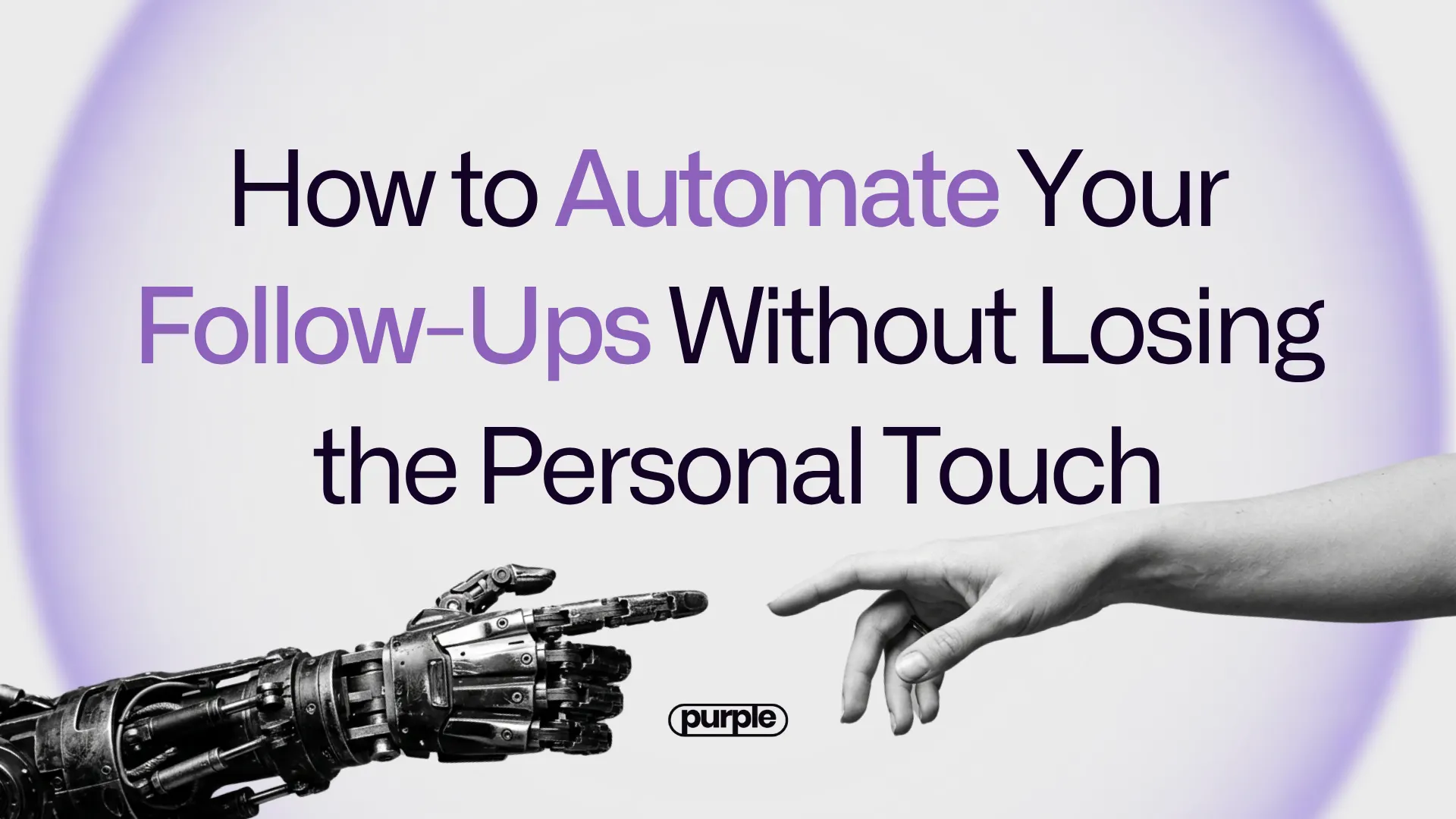
How to Automate Your Follow-Ups Without Losing the Personal Touch

Your team sent a great first message. The lead responded. Things felt promising. Then life got busy. Someone forgot to follow up. Three weeks passed. By the time anyone circled back, the conversation was cold, and the lead had moved on. This is not a motivation problem. It is not even a capacity problem. It is what happens when follow-ups depend on a person remembering to do them while also managing everything else on their plate.
The Follow-Up Problem by Industry
The pain shows up differently depending on the business, but the root cause is always the same.
Professional services and consulting. A potential client books an initial call, seems interested, and asks for a proposal. The proposal goes out. Then silence. Nobody follows up at the right time because the consultant who sent it is already deep in three other client engagements. The lead was real. The timing was just wrong.
Logistics and operations. A supplier or partner inquiry comes in after hours. It gets acknowledged the next morning, but the follow-up with the actual information they needed takes four days because it got buried. By then, they have already spoken to two competitors.
Retail and e-commerce. A customer abandons a quote request or a custom order inquiry. Nobody on the team has a system for following up on incomplete inquiries. Those leads sit in an inbox until someone does a monthly clean-up.
Technology and SaaS. A trial user signs up, uses the product twice, and goes quiet. The team knows they should check in, but with dozens of new signups every week, personalized follow-ups are impossible to sustain manually.
In every case, the pattern is the same. The first contact happens. The follow-up does not. The opportunity disappears quietly with no alarm going off.
Why Businesses Hesitate to Automate This
The concern is understandable. No business wants its communication to feel like a mass email. When someone has shown genuine interest, a generic template feels like a step backwards from the personal conversation they were already having.
This hesitation is based on what automation used to be. Rigid sequences. Fixed templates. Messages that went out on a timer, regardless of context.
That is not what it looks like now.
What Modern Follow-Up Automation Actually Does
A well-built follow-up system does not replace the human conversation. It makes sure the human conversation actually happens.
Here is what it looks like in practice.
A lead comes in and receives an immediate, relevant response that references exactly what they enquired about, not a generic acknowledgement. If they do not reply within a defined window, a follow-up goes out that approaches the conversation from a slightly different angle. A third message, if needed, offers something useful rather than simply repeating the ask. The moment the lead responds, the automated sequence stops, and the conversation is handed to a person with full context already gathered. Nothing is left to memory. Every step happens as intended, every time, regardless of how busy the team is.
The Industries Where This Changes Everything
For professional services firms, automated follow-ups mean proposals do not go cold because a consultant is heads-down on delivery work. The system follows up on your behalf while you focus on the client you are already serving.
For logistics and operations businesses, leads and partner inquiries that come in outside office hours get a structured response and a follow-up sequence that keeps the conversation moving until a human is available to take it.
For retail and e-commerce, incomplete inquiries and abandoned quote requests are followed up on systematically. The team stops doing a monthly clean-up of lost leads and starts having conversations with people who actually want to buy.
For technology companies, new signups and trial users receive personalized check-ins at exactly the right intervals based on their behavior. Not a generic email sequence. A system that knows where they are in the journey and responds accordingly.
The Cost of Not Having This
Every week without a follow-up system is a week where leads go cold, proposals sit unanswered, and potential clients choose someone else simply because that someone else stayed in touch.
The businesses that convert at a higher rate are not necessarily better at their work. They are better at showing up consistently after the first conversation.
A team of ten people handling fifty active leads manually will always drop some. Not because they are not trying, but because the volume makes consistency impossible. The businesses that solve this stop relying on people to remember and build a system that does it for them.
Where to Start
Do not try to automate everything at once. Pick the single follow-up that currently falls through the cracks most often. For most businesses, that is either the post-enquiry follow-up or the post-proposal follow-up. Map out what the ideal sequence would look like if a thoughtful person were managing it manually. How many touchpoints are there? What each one says. How long is there between each one? Then build that logic into a system that runs it automatically every time.
The results are usually visible within weeks. Reply rates improve. Leads stop going cold. The team stops spending time on follow-up admin and starts spending it on actual conversations.
About Purple Software
Purple Software builds AI-driven systems that handle follow-ups, lead qualification, and operational workflows end to end. We design around how your business actually works, not around a generic template.
Show us one follow-up process that is currently falling through the cracks. We will map out exactly how to automate it without losing the personal touch. Free, no commitment.
Book a free session at purple.lk